
A report by Bain & Company and HealthQuad identifies remote patient monitoring, OT/ICU optimisation, and chronic disease management as key opportunities for Artificial Intelligence in Indian healthcare. The report highlights a shift from experimental AI to real-world applications, driven by government initiatives, increasing EMR adoption, and a robust startup ecosystem. AI's autonomous capabilities are rapidly advancing while costs decrease, creating significant growth potential for providers and startups.

Patrice Caine, Chairman and CEO of Thales, highlighted Artificial Intelligence as both a major cybersecurity challenge, accelerating attack speed and autonomy, and a crucial tool for defenders. He also warned about quantum computing's future threat to encrypted data. Thales introduced new AI-powered solutions like Luna 8 and CipherTrust DSPM at its Cyber Summit 2026 to combat these evolving threats.

Cathy Li, Head of the Centre for AI Excellence at the World Economic Forum, advocates for integrating AI literacy into India's education curriculum and incentivising AI companies to prioritise child safety. She stresses the need for localised solutions that account for India's linguistic and cultural diversity, as well as varying levels of connectivity and digital literacy, to ensure AI systems are safe and beneficial for children.
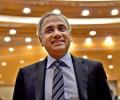
Infosys CEO Salil Parekh stated on Tuesday that the company's AI services, currently contributing over 8% of revenue, are growing rapidly and could account for almost half of its work within two to three years. He highlighted the strong demand for AI services, the company's hiring and training efforts for graduates in AI, and discussed potential risks like infrastructure challenges and societal backlash.

Chief Economic Advisor V Anantha Nageswaran has stressed the urgent need for India's financial sector to proactively address the safety and security risks of artificial intelligence, stating that waiting for problems to materialise is not an option.

'The government has to act as one unit since the threat from these newer models will soon scale up.'

Coursera found that nearly 94 per cent of employers of professionals who took micro-credential courses on the platform said these professionals could command higher salaries than their peers.

Recognising the growing use of AI/ML models by regulated entities across business and decision-making processes, the RBI said weaknesses in governance, oversight, risk management, and controls could expose institutions to financial, operational, compliance, and reputational risks.

Tata Consultancy Services (TCS) has inaugurated India's first Industrial Autonomy & Engineering Lab in Pune, a "lights-out factory lab" designed to advance AI-led manufacturing. The facility features a robotic battery pack assembly line, enabling manufacturers to prototype and scale AI-first production systems with minimal human intervention, simulating self-optimising factories.

A Lucknow court rejected the bail applications of model Shraddha Dubey, her sister, and driver in connection with the murder of cafe owner Shiva Sharma. The court deemed the case serious and triable by a sessions court. The accused were arrested in Nagpur and are currently in judicial custody, while police investigate the alleged murder which was initially treated as an accidental death.
A Bain & Company report projects the global AI market must reach nearly USD 6 trillion annually by 2031 to sustain massive infrastructure investments. This growth will largely depend on new innovations beyond productivity gains, with a significant gap needing to be filled by emerging revenue streams like autonomous vehicles, physical AI, and new AI-driven products. The report also highlights the surge in hardware and semiconductor industries due to AI compute demand and the importance of AI absorption for Indian companies.
A foreign brokerage predicts that private investments in Indian AI startups are rapidly growing, with potential listings adding up to USD 100 billion to India's market capitalisation over the next two to five years. Goldman Sachs reported a tripling of PE investment in Indian AI startups in 2025 and highlighted India's rising global rank in AI funding and new AI companies.
A Lucknow court rejected the bail applications of model Shraddha Dubey, her sister, and driver in connection with the murder of cafe owner Shiva Sharma. The court deemed the case serious, while police continue their investigation after the trio's arrest and remand to judicial custody.

India published 929 generative AI patents in 2024 and 2025 alone -- equating to nearly 70 per cent of the 1,350 patents it published over the entire previous decade (2014 to 2023).

IBM India and South Asia MD Sandip Patel stated that India is at a defining moment with a unique opportunity to shape exponential technologies like artificial intelligence, emphasizing that "when India builds, it builds for billions," leading to scalable impact. Speaking at the IBM Think 2026 event, Patel highlighted that the AI revolution is still in its early stages, requiring enterprises to redesign their operations around agents, real-time data, automation, hybrid architecture, and trust. He also introduced the concept of "digital swaraj" or sovereignty in the Indian context, stressing the importance of control over operating environments, data, technology, and AI execution. IBM also announced an MoU with MeitY Startup Hub to accelerate India's deep tech innovation and startup ecosystem, providing startups access to IBM's technology expertise and platforms like watsonx and Sovereign Core.

The move comes amid growing demand from organisations in India for local access to Claude.
India is adopting a two-pronged strategy for artificial intelligence development, focusing on open-source models and indigenous innovation to counter global access restrictions on advanced AI technologies. The government aims to support local developers and ensure AI creates tangible economic impact across various sectors, rather than being solely driven by market speculation.

A new HCLTech study reveals that 84% of global wealth management firms recognise the need to redesign their operating models for AI, yet less than 10% are prepared for the transition. The report identifies "blind spots" in ambition, execution, and strategy, hindering effective AI implementation and measurable business outcomes.
Telangana IT Minister D Sridhar Babu stated that Gen Z will be the driving force behind the next wave of AI and green innovation. He urged young innovators to use their skills to solve real-world challenges, particularly in sustainability. The launch of the Green Skills and Applied AI Centre of Excellence in Hyderabad, a partnership between Telangana's IT Ministry, Microsoft, 1M1B, and MeitY Startup Hub, aims to equip graduates with industry-relevant skills in AI, green pharma, solar energy, EVs, and wind energy, with 100 job offers already announced.
Perplexity CEO Aravind Srinivas presented the company's vision for advanced AI operating systems at COMPUTEX 2026, detailing how Perplexity Computer orchestrates up to 20 AI models for efficient task management. The system uses hybrid agentic inference to balance performance, privacy, and cost by deploying models locally or via data centres based on task complexity, a concept supported by Intel CEO Lip-Bu Tan's focus on on-device AI.

A new global survey by HP reveals that a majority of Indian students are concerned that while AI helps them work faster, it prevents them from learning material as deeply. Despite these worries, students remain optimistic about AI's role in future job markets and feel confident in using AI tools responsibly. The report calls for policymakers to focus on durable skills and core education.
The Indian Institute of Management Ahmedabad (IIMA) has opened applications for the second batch of its two-year Blended MBA Programme in Business Analytics & Artificial Intelligence (BPGP: BA & AI). The programme, offered by the Krishnamurthy Tandon School of AI, aims to develop professionals who can integrate AI technology with management principles, addressing the industry's need for leaders capable of driving transformation and managing complex IT infrastructure, including data centres.
KPMG in India CEO Yezdi Nagporewalla expressed concern over the high valuations of global AI companies, deeming them unsustainable. He believes India, despite a late start, has a strong chance to develop its own unique Local Language Models due to its robust tech ecosystem and global capability centres.

India's IT Ministry sources state the country will not slow down its Artificial Intelligence development, distinguishing its focus on people-centric applications from global concerns over frontier models. The government acknowledges AI safety risks and is tightening incident reporting norms, with IT Minister Ashwini Vaishnaw emphasising regulation for user safety.

The aim is to win over the country's enterprises, developers and startups as AI systems shift from answering questions to autonomously executing tasks.
Two IIT Gandhinagar students have developed "TrustGate," an AI-based cybersecurity system designed to protect critical infrastructure like water treatment plants and power grids. The system uniquely combines network traffic and physical sensor data to detect sophisticated cyber attacks, identify affected equipment, and provide real-time alerts to operators, earning them an international award.

Nasscom President Rajesh Nambiar stated that artificial intelligence is not making India's Business Process Management (BPM) industry obsolete but is instead driving its significant reinvention. He highlighted that the sector has an opportunity to become the world's "intelligent operations and transformation hub" by leveraging AI, analytics, and cloud-based operations, moving beyond traditional call centres. Nambiar outlined three key priorities for the industry, including reimagining processes, building hybrid human-AI operating models, and redefining India's global BPM representation.
Airtel Business CEO Sharat Sinha stated that evolving architecture and methodologies for safely deploying Artificial Intelligence, coupled with adequate guardrails, are essential to unlock productivity gains. He welcomed the government's upcoming consultation paper on AI regulation, focusing on safety, deepfakes, and a human-first approach. Sinha also highlighted AI's role in driving demand for digital infrastructure and Airtel's growth in cybersecurity and fraud prevention.

Finance Minister Nirmala Sitharaman has called for enhanced accountability and safeguards for artificial intelligence, particularly as it integrates into critical sectors like finance. Speaking at the Global Fintech Fest, she highlighted the dual nature of AI, capable of accelerating transactions but also amplifying fraud and cyberattacks. Sitharaman stressed the need for human and institutional responsibility in AI-driven decisions, urging regulators and companies to scrutinise high-risk AI applications. She also proposed a federated industry platform for Indian tech companies to navigate international regulations and ensure tax compliance globally.

NITI Aayog member Abhay Karandikar stated that the US government's new export controls, which led AI giant Anthropic to take its latest models offline, underscore the critical need for India to achieve self-reliance in technology development, particularly in AI infrastructure and hardware.
Haryana Chief Minister Nayab Singh Saini met with a World Bank delegation to discuss advancing Artificial Intelligence, digital governance, and skill development in the state. The discussions focused on leveraging technology to enhance citizen services, with plans to showcase Haryana's AI Sandbox globally and develop a dedicated AI model for the state.

Climate scientist Tapio Schneider advocates for expanding early warning systems beyond rainfall events to include other disaster triggers like flash floods, citing the recent Nepal floods. He highlights the inevitability of 1.5 degrees Celsius global warming and discusses the role of advanced climate modelling and AI in improving predictions and research, particularly for regions like India.

A technology institute in Indore has developed an 'AI Yoga Coach' that can distinguish between correct and incorrect yoga postures and provide real-time guidance to practitioners.

India's largest bank, SBI, is investigating the suspected exposure of 3,897 customer records containing personally identifiable information on the dark web. The bank received alerts on October 16 and has initiated cyber incident response protocols, engaging an independent cybersecurity agency. While a detailed assessment is underway, SBI states the incident has not materially impacted its core business operations. This comes as CERT-In also warned last week about autonomous AI agents accessing confidential data and reported a compromise of eMudhra's private keys.

Fashion model Shraddha Dubey, a prime suspect in the alleged murder of Lucknow cafe owner Shiva Sharma, has been arrested in Nagpur by a joint police team. Dubey, who was on the run for 11 days, denies involvement, claiming Sharma died by suicide due to financial distress, while his family alleges murder.
UST, a California-based technology company, highlights India's unique opportunity to build an AI-native semiconductor ecosystem, bypassing older models. Speaking at SEMICON India 2026, UST COO Gilroy Mathew emphasised India's advantage in investing in infrastructure and talent at the right time, enabling it to create AI-native manufacturing and supply chains for future competitiveness.
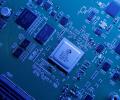
The Hyderabad AI factory is being designed to run some of the world's largest and most sophisticated AI models, including trillion-parameter models and next-generation agentic AI applications.
A joint report by Dell Technologies and Zinnov reveals that despite high ambition, nearly 70% of India's Global Capability Centres (GCCs) are stuck at the pilot stage for AI adoption. Foundational gaps in data, infrastructure, and governance are identified as key bottlenecks preventing the scaling of AI initiatives into enterprise-wide production. The report highlights the need for significant reskilling of the workforce and robust foundations for industrialising AI responsibly.
ExlService Holdings, a data and AI company, announced its acquisition of AI data solutions firm iMerit for up to USD 310 million. This strategic move aims to accelerate AI innovation, deepen EXL's AI capabilities in model training and evaluation, and expand its market presence in high-growth AI tech sectors. The transaction is expected to conclude in Q3 2026.
NVIDIA has acquired AI startup Hugging Face for USD 12.9 billion, aiming to scale its platform, strengthen infrastructure, and expand access to AI for developers and institutions worldwide while maintaining an open ecosystem.
